
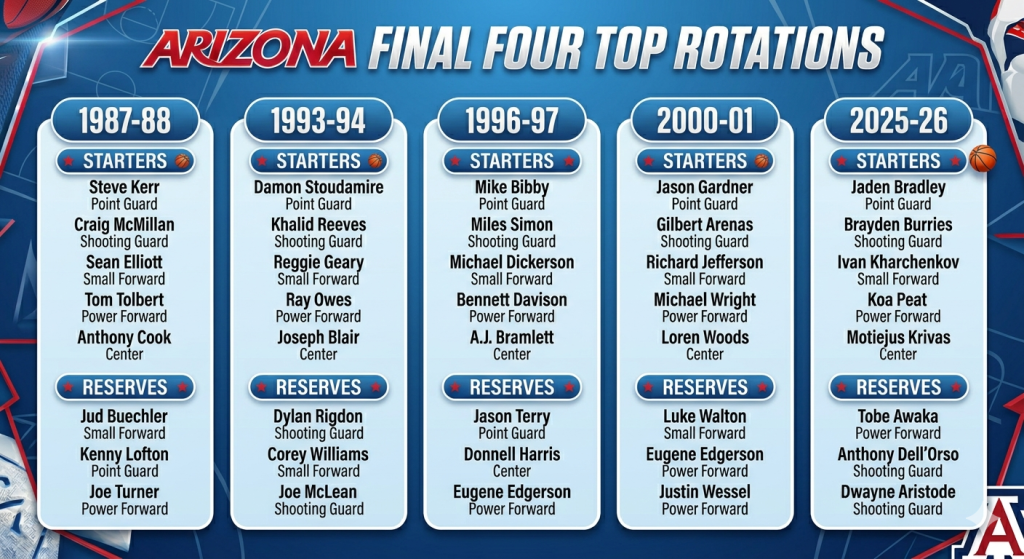
Each of Arizona’s five Final Four runs represent different dynamic roster constructions, defined by features that separated them from other Wildcat basketball teams.
Lute Olson’s first Final Four team of 1987-88 featured unflappable chemistry and elite perimeter shooting with Steve Kerr mixed with the playmaking ability of All-American forward Sean Elliott. The reserves were affectionately known as the “Gumbys,” marked by their wild celebrations. On the court, they were surgical, evidenced by a 35-3 record. Kerr’s 57.3% accuracy from 3-point range remains one of the most efficient shooting seasons in NCAA history. This team proved that a finesse-oriented, efficient perimeter game could contend with the physical landscape of the late 80s.
The 1993-94 team featured arguably the best backcourt in Arizona history — Damon Stoudamire and Khalid Reeves — otherwise known as “Thunder and Lightning.” If 1987-88 was about precision, 1993-94 was about explosive offensive volume. Stoudamire and Reeves averaged a combined 42.5 points per game. Their style included relentless transition layups and pull-up jumpers. Olson gave them the green light and they went full bore.
The 1996-97 national championship team was defined by resilience, which each starter embodied, beginning with Mike Bibby and Miles Simon in the backcourt. While they finished fifth in the Pac-10, their outstanding feature was an unmatched ability to rise to the highest challenges. They remain the only team in history to defeat three No. 1 seeds in a single tournament (Kansas, North Carolina, and Kentucky). With Bibby, a freshman, and the indomitable Simon, the team was clutch. They won three overtime games during the season, culminating in the program’s first and only title achieved in an overtime win over Kentucky.
The 2000-01 team had the most physically gifted and complete roster Olson assembled. Their standout feature was a blend of supreme talent at every position, led by Jason Gardner’s ironman endurance, Gilbert Arenas’s scoring flair, Richard Jefferson’s elite athleticism, and the physicality of Michael Wright with the defensive prowess of Loren Woods on the frontcourt. That starting lineup created matchup nightmares. They suffocated opponents with length and depth that allowed them to dominate.
This year’s Final Four team, crafted by Tommy Lloyd, is characterized by its high-efficiency, positionless flow offense. The outstanding feature is the combination of ball movement with elite athleticism. With a frontcourt featuring the passing of Koa Peat and the rim protection of Motiejus Krivas, complemented by the downhill aggression of Jaden Bradley and the scoring punch of Brayden Burries, this team plays fast and unselfish. Ivan Kharchenkov can defend multiple positions while also presenting a threat on the offensive end with drives to the basket and spot-up shooting. They represent the modern evolution of Arizona, a team that values points per possession, including many at the free-throw line, and versatile defending.
Through these five different teams, Arizona has shown that while the players change, the program’s DNA — defined by elite guard play, and transition scoring — remains the heartbeat of what Olson started and what Lloyd is executing now.
POINT GUARDS
Point Guard U. lives on with Bradley as the latest of the Final 4 floor generals.
Kerr was not only a perimeter-shooting marksman, but he was an impeccable ball handler and decision maker. His assist-to-turnover ratio during the 1987-88 season was an astonishing 4.17. During that Final Four run, Kerr dished out 150 assists while committing only 36 turnovers across 38 games. His shooting percentage of 57.3% from 3-point range stands as a school record that likely will not be broken. Salim Stoudamire is the only other player to crack 50% and that was 50.4% in 2004-05.
Stoudamire, a.k.a. Mighty Mouse, was a blur of left-handed crossovers and fearless drives. Listed at 5-foot-10, Stoudamire averaged 18.3 points, 5.9 assists, and 4.5 rebounds a game in 1993-94. In the Elite 8 win over Missouri, Stoudamire had 27 points and 10 rebounds. He became one of only two players in Pac-10 history (along with Oregon State’s Gary Payton) to finish a career with more than 1,800 points, 600 assists, and 400 rebounds.
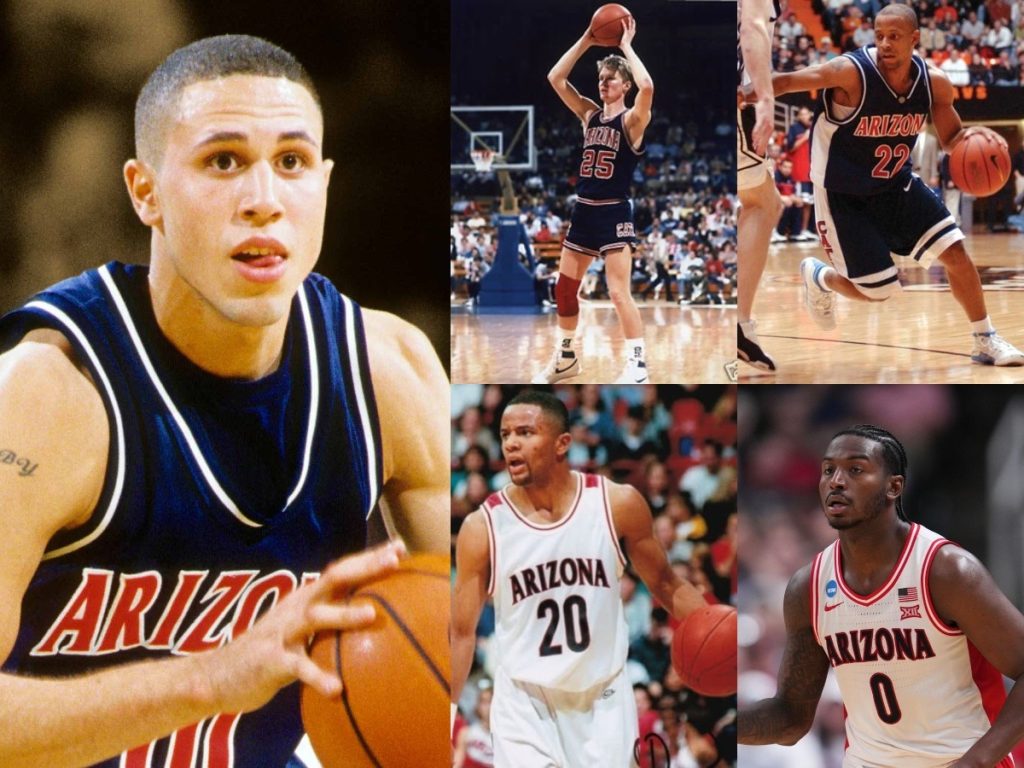
Bibby as a freshman phenom in 1996-97 who played with the savvy of a senior. He was a facilitator and closer. Bibby set the Arizona freshman record at the time for points (474), assists (178), and steals (76). He was the first freshman in Pac-10 history to lead a national championship team in both assists and steals. In the NCAA tournament, he averaged 16.3 points (up from his 13.5 season average) and shot 48.6% from 3-point range. In the win over Kentucky, Bibby played 45 minutes, scoring 19 points and grabbing nine rebounds.
Gardner in 2001 was the engine while his backcourt mate Arenas offered the bells and whistles. Gardner’s most staggering statistic was his durability. He averaged 38.2 minutes per game. Despite playing nearly every minute and handling the ball on almost every possession, Gardner was incredibly impeccable with 143 assists compared to 71 turnovers (2.01 assist-to-turnover ratio).
Bradley is aptly carrying on the Point Guard U. legacy. A defensive terror with a veteran’s pulse, Bradley represents strength, quickness and a relentless selfless style. His most impressive individual feature is his consistency in high-leverage moments. In Big 12 play, he scored 17-plus points seven times, including the game against Iowa State that clinched the regular-season title outright and the buzzer-beating jump shot against the Cyclones in the thrilling Big 12 tournament semifinal victory. He maintains a 2.6 assist-to-turnover ratio, which is remarkable given the high-tempo flow offense Lloyd runs.
SHOOTING GUARDS
Arizona’s first McDonald’s All-American, Craig McMillan was a spacer for Kerr as a physical, 6-foot-6 defensive presence who could initiate the offense. His versatility allowed Olson to run a sophisticated motion system that overwhelmed the Pac-10. He dished out 125 assists compared to just 51 turnovers, an excellent 2.45 assist-to-turnover ratio befitting of a point guard, not a shooting guard. He made 55.1% shots from the field, including 41.7% from 3-point range. He was often tasked with guarding the opponent’s best perimeter player.
Alongside Stoudamire, Reeves put up the most prolific scoring seasons in school history, averaging more than 24 points per game. He was a nightmare to track through screens, and possessed a midrange game that felt automatic. The most impressive stat is his 848 total points, which remains the Arizona single-season scoring record. In the Final 4 run, he averaged 25.8 points per game over five tournament games. He shot an elite 53.1% from the field and 45.5% from 3-point range during that stretch.
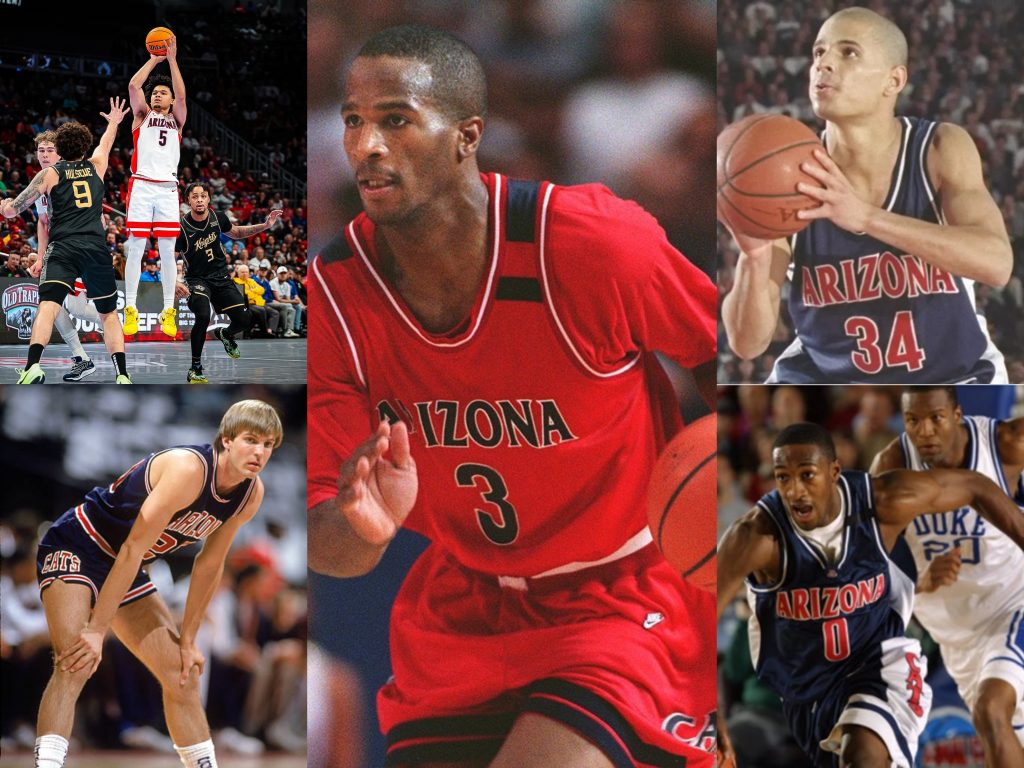
Ineligible for the first semester of the 1987-88 season, Simon returned to become the NCAA Tournament Most Outstanding Player. He was a savvy guard who could draw fouls at will and finish through contact. His emotional leadership was the X-factor that helped the Wildcats past three No. 1 seeds. He averaged 22 points over the six tournament games. In the national championship game against a loaded Kentucky team, Simon dropped 30 points. He was the only player on either team to cross the 20-point mark, and he did it while playing 43 of the 45 minutes.
Arenas was a freakish athlete with unlimited range, traits he used to become a high-scoring NBA guard. His ability to create his own shot from nothing provided the explosive punch that fueled Arizona’s march to the championship game in 2001 at Minneapolis. His field-goal percentage was 47.9%, including 41.6% from 3-point range. His versatility extended to his defense with 65 steals that season.
Burries is carrying the mantle of the shooting guard being a perfect complement to a point-guard leader in the backcourt. Burries combines McMillan’s size with Reeves’ scoring instinct. As the latest link in this chain, he proves that at Arizona, the shooting guard spot is legendary. Burries has scored the second-most points for a freshman in the history of the program with 613 points, trailing only Deandre Ayton’s 704 in 2017-18 season. In the gauntlet of the Big 12, his scoring average was 19.5 points in road games, proving he could handle the most hostile environments in college basketball (including a 25-point performance at Kansas).
SMALL FORWARDS
Elliott was the local hero with a fundamental, accurate jumper and explosive first step using his athleticism. He went from starring at Cholla High School to becoming the consensus National Player of the Year at Arizona. He wasn’t just a scorer; he was a 6-foot-8 matchup nightmare who could facilitate like a guard and rebound like a center. His presence gave the first Final Four team its superstar gravity. His 57.0% field goal percentage was rare for a player who took nearly 15 shots per game. Many of them jump shots, yet he shot as accurately as a center. This efficiency earned him the Wooden Award and the Adolph Rupp Trophy as the National Player of the Year.
In the 1993-94 season, Reggie Geary, much like Kharchenkov, was more of a third guard than a small forward but his versatility, especially on defense, meant he could very well excel at the No. 3 position. He consistently met the challenge of his defensive assignments as a swing man. He didn’t need to lead the team in scoring to dominate; his outstanding feature was a relentless, defensive pressure that often shut down the opponent’s leading scorer on the perimeter. He was the emotional spark plug that fueled the run to the Final Four. He had 60 steals that season along with 122 assists. His 21 blocked shots ranked second on the team.
The 1997 title team leaned on the grit of Michael Dickerson, a smooth, high-volume scorer who provided the essential perimeter spacing that allowed Bibby and Simon to operate. His ability to hit contested jumpers and run the floor in transition made him the quiet contribute to the championship run in 1996-97. His most impressive statistic was his unwavering scoring consistency, specifically his 18.9 points per game while shooting a remarkably efficient 40.3% from 3-point range. He reached double figures in 33 of 34 games. In a season defined by peaks and valleys for the Wildcats, Dickerson was the one constant offensive threat that Olson could rely on every single night.
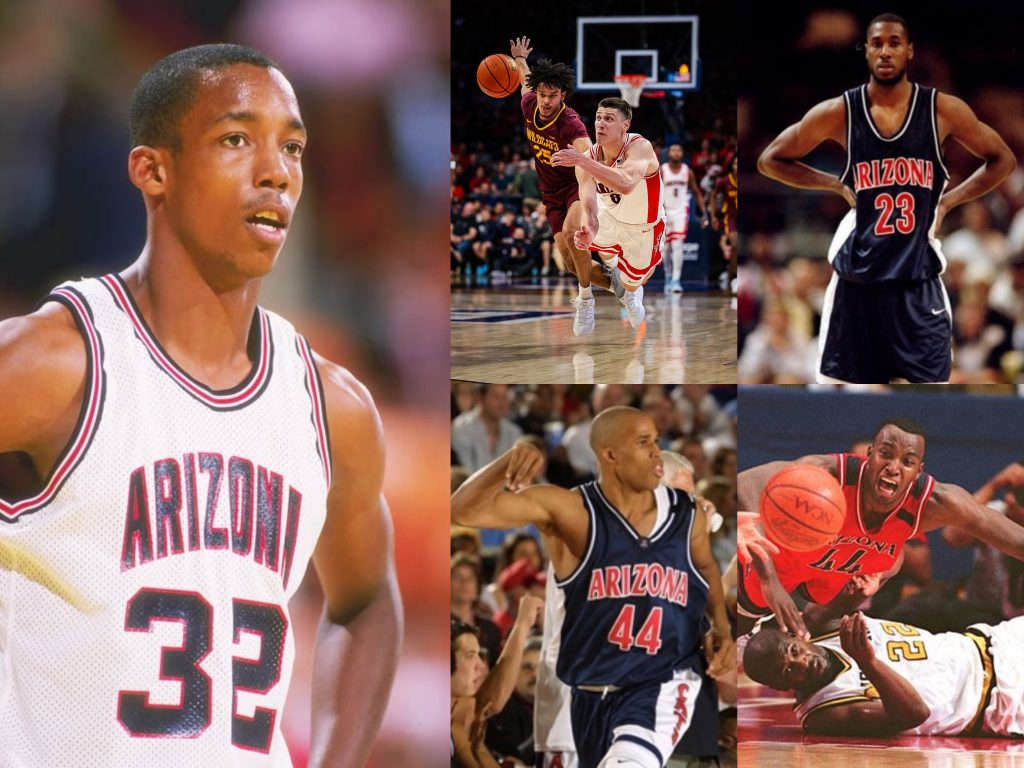
In 2001, Jefferson brought elite NBA-level athleticism to the wing. He provided a vertical dimension that forced defenses to collapse, leaving the perimeter open for Gardner and Arenas. Defensively, he was elite. In back-to-back NCAA tournament games, Jefferson was tasked with guarding Big Ten Player of the Year Frank Williams (Illinois) and All-American Jason Richardson (Michigan State). Williams and Richardson averaged nearly 30 points combined on the season; Jefferson’s length and athleticism neutralized them, serving as the primary reason Arizona advanced to the national championship. He held the duo to a combined 5-of-26 (19.2%) from the field.
Kharchenkov is a versatile, physical wing from Germany who combines Dickerson’s inside-outside game with Geary’s defensive toughness. As the newest link in the chain, he proves that at Arizona, the small forward is the glue of starting lineup. In the Big 12, a conference known for physical interior play, Kharchenkov functioned as a secondary rim protector, allowing Arizona to play small-ball lineups without sacrificing defense. He is averaging 4.9 rebounds, second of all Arizona perimeter players. His 94 assists rank second on the team.
POWER FORWARDS
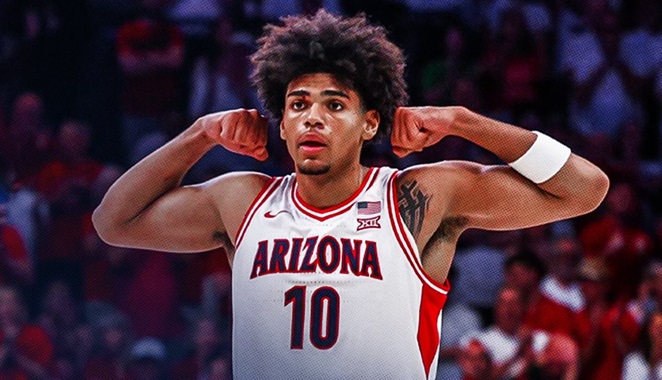
Tom Tolbert, one of the few early junior college transfers in the Olson era, had a colorful personality with a blue-collar game in 1988. His rugged interior presence balanced Elliott’s grace and Anthony Cook‘s length. His statistical hallmark was his relentless rebounding (5.8 a game) and high-percentage finishing (54.7% shooting from the field). Tolbert provided the interior muscle (6-7 and 235 pounds) that allowed Arizona to dominate the Pac-10, proving that this Final Four team needed a bruiser who could also pass out of the post.
Playing alongside young post player Joseph Blair in 1993-94, Ray Owes was a model of consistency and mid-range precision. His most impressive trait was his nose for the ball, consistently leading the team in rebounding during the gauntlet of the 1994 tournament. Owes, 6-foot-9, was the stabilizing force that anchored the defense while the backcourt of Stoudamire and Reeves pushed the pace. He led the team with 283 total rebounds (8.1 a game). He was a specialist on the offensive glass, frequently providing and-one putbacks. In the 1994 NCAA Tournament, his ability to outwork taller frontlines from schools like Missouri was a key factor in Arizona reaching the Final Four. He shot 53.6% from the field and averaged 11.4 points a game.
Bennett Davison was another 6-foot-8 junior college transfer who handled his role the way Olson wanted. He was the quintessential glue guy who provided the interior athleticism Arizona needed to match up with taller frontlines. Davison, who had springs for legs, understood his role perfectly: clean the glass. Nearly 45% of his total rebounds came on the offensive end (86 of 195). He also shot 52.8% from the field, most of the shots transition dunks, lobs or put-backs.
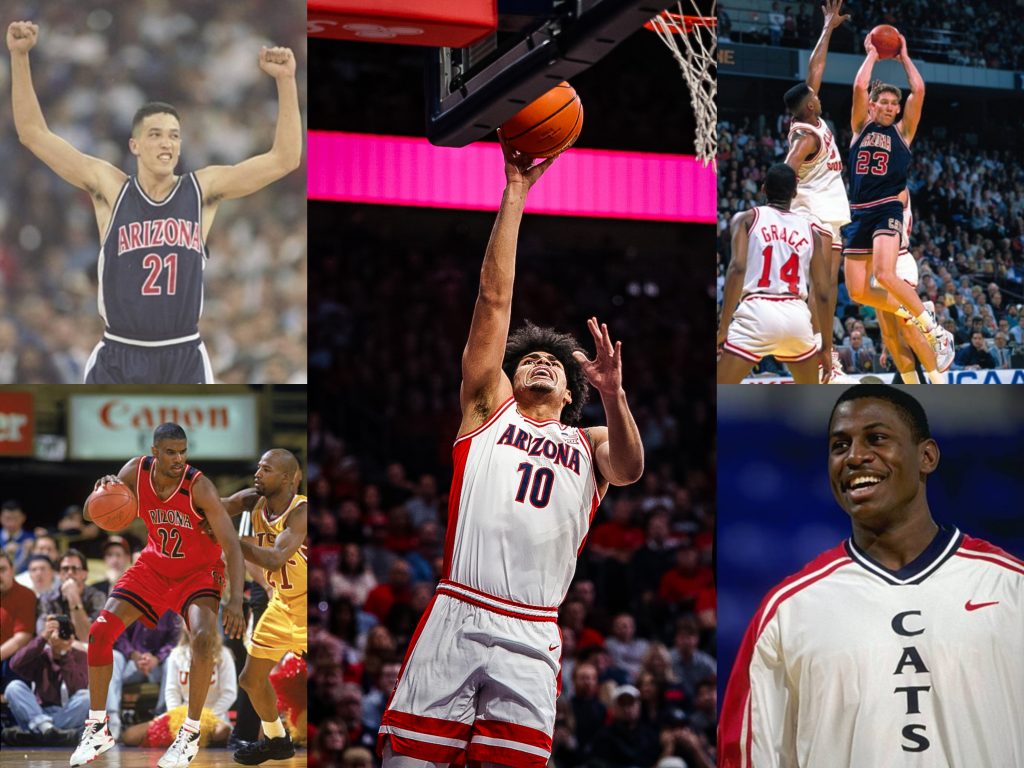
Wright brought an unstoppable low-post motor to the 2000-01 team. A walking double-double, Wright was difficult to guard one-on-one. His combination of strength and a quick first step made him the perfect interior focal point. He shot a phenomenal 59.4% percent from the field at 6-foot-8. He averaged 15.6 points and 7.8 rebounds — his stats often overlooked because of the star power of Arenas and Jefferson. His ability to draw fouls was equally impressive, as he went to the free-throw line 197 times during the season and made 157 for a percentage of 79.7.
Now, this season, Peat represents the ultimate modern evolution — a 6-foot-8 presence with a massive wingspan (7-foot-4) and an advanced basketball IQ, Peat combines rebounding tenacity (5.5 a game) with playmaking point-forward skills of the modern era. He has a skill set that bridges the gap between old-school power and new-school versatility. Consider this: Peat has 93 assists. The most his Final Four predecessors at the position produced was 30 (Davison). Lloyd uses Peat as a high-post hub. When Peat catches the ball at the elbow, defenses have to respect his drive, which opens up backdoor cuts for the wings. He is the first Arizona big man since 2000-01 Final Four team reserve forward Luke Walton to orchestrate the offense from the interior.
CENTERS
The wiry Cook (6-foot-9 and 205 pounds) was a shot-blocking specialist who had elite timing and verticality for the 1987-88 team. His interior presence ensured that Kerr and Elliott could gamble on the perimeter, knowing the paint was protected with Cook. He compiled what was then a school-record 75 blocks in a single season. He continues to own the career record for blocked shots at 278. His role as the anchor of the defense was a significant reason why opponents shot only 42.8% from the field. He averaged 13.9 points and 7.1 rebounds a game. His shooting percentage of 61.8 indicated Arizona’s ability to get him the ball off penetration and lobs.
By 1994, the post position evolved into more of fundamentally sound offensive presence of Blair, only a sophomore that season who could create his own shot. His statistical hallmark was his offensive rebounding (he averaged 7.2 overall while posting 82 offensive rebounds) and field-goal efficiency (60.7%). In the run to the Final Four, Blair’s ability to finish at the rim and provide second-chance opportunities was the X-factor that balanced the high-scoring backcourt of Reeves and Stoudamire.
The 1997 national champions run featured the blue-collar dominance of A.J. Bramlett. While Bibby, Simon and Dickerson hit the shots, Bramlett battled in the trenches. His performance against Kentucky in the champinship — in which he battled elite SEC big men for 40 minutes — remains the blueprint for a winning Arizona center in a meaningful game. He had only three points but pulled down six rebounds (four on the offensive end), blocked a couple of shots and recorded a steal. Bramlett’s defensive mobility allowed Arizona to switch screens and neutralize the fastest teams in the country. He finished with 33 blocked shots on the season and led the team averaging 6.9 rebounds a game.
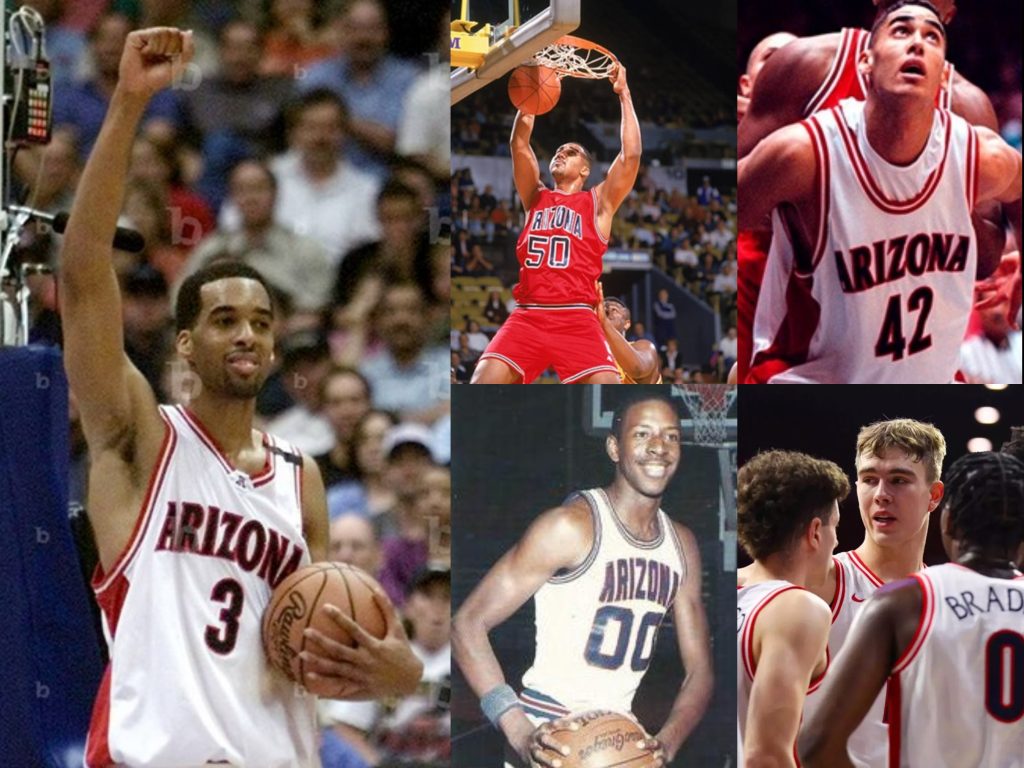
In 2001, Woods provided a different dimension: elite length. A 7’1″ shot-blocking machine, Woods anchored the defense. His triple-double earlier in the season involving blocked shots was a testament to his dominance. He tallied a school-record 102 blocks a season earlier, and finished with 84 when Arizona reached the Final Four. He was solid on the offensive end as well, averaging 13.2 points a game and making 50.4% of his shots (showing a deft shooting touch from mid-range),
Now, Krivas embodies some of the same defensive skills as Woods only he is much more of mountain to climb for defenders. The 7-foot-2 Lithuanian is 260 pounds. Woods was listed at 245 pounds but looked leaner. With a soft touch and elite passing vision, Krivas combines the shot-blocking of Woods with the tactical passing of modern-era big man. Krivas has 42 assists to go with his 56.9% shooting from the field and 78.5% mark from the free-throw line. His 72 blocked shots ranks seventh in a season in Arizona history. It’s no coincidence that Final Four bigs Woods, Cook and Krivas occupy six of the top eight spots in Arizona’s blocked shots leaders for a season.
RESERVES
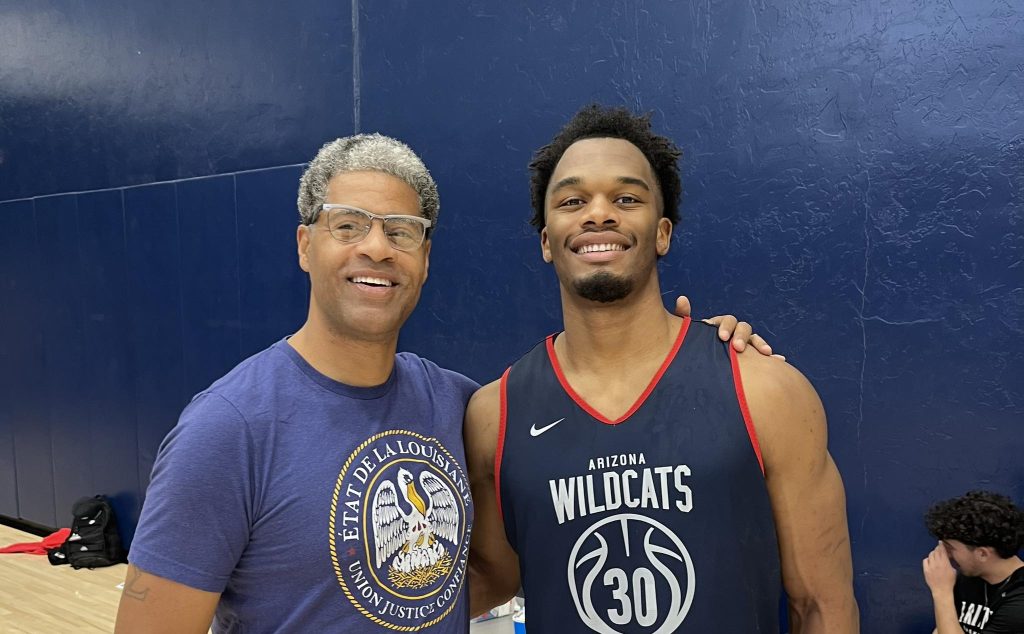
In 1988, the Arizona reserves, nicknamed “The Gumbys,” were an integral part of the team’s culture. That group was led by Harvey Mason, Matt Muehlebach, Sean Rooks and Mark Georgeson. Reserves who saw most action including Kenny Lofton, Jud Buechler, and Joe Turner. The ultra-quick Lofton, who went on to steal bases in the major leagues, recorded a team-high 60 steals in 1987-88. Buechler brought a multi-sport athleticism that allowed Arizona to stay fast. His contribution came in diving for loose balls and being part of a defensive rotations that was effective with Elliott on the bench. Turner was reliable at the post, shooting 55.5% from the field and averaging 3.1 rebounds in only 15.2 minutes per game. Mason, a guard who would later found fame in the music industry, provided relief for Kerr with his perimeter shooting (47.5% from 3-point range).
In 1994, the rotation included valuable reserves such as Dylan Rigdon, Kevin Flanagan, Joe McLean and Corey Williams. Rigdon had the ability to stretch the floor with his perimeter shooting (41.1% from 3-point range), Flanagan and McLean were selfless team players, and Williams was a sophomore who was also reliable from beyond the arc (shooting 42.4% from that range).
The 1997 national championship team featured a versatile bench led by Sixth Man of the Year, Jason Terry. Terry, a sophomore, exuded selflessness letting it be clear to Olson that he did not mind Bibby taking his spot as a starter at point guard despite Bibby being a freshman. Terry averaged 1.9 steals in just 22.9 minutes per game. On a per-40 minute basis, he was averaging an astounding 3.4 steals. This elite defensive activity was the primary reason Arizona could shift the momentum of a game in a matter of seconds. Despite coming off the bench, he played the third-most minutes (1,037) of the team, only behind Bibby (1,110) and Dickerson (1,079). Eugene Edgerson and Donnell Harris were the lunchpail guys who complemented Arizona’s perimeter standouts. Edgerson was a rebounding machine (averaging 3.7 a game in only 8 minutes a game). Harris provided the length and shot-blocking that gave Arizona a different defensive look (his 22 blocked shots tied Bramlett for second most on the team).
Gardner, Arenas, Jefferson, Wright, and Woods played more than 27 minutes each a game during the 2000-01 season, but the run to Minneapolis wouldn’t have happened without Luke Walton. As a sophomore reserve, Walton was an elite passer from the high post, which allowed Arizona to run a complex, fluid offense. Walton’s ability to act as a point forward off the bench foreshadowed his future NBA success and gave Olson a player with a high basketball IQ on the court during critical tournament stretches. Walton’s 115 assists trailed only Gardner’s 147 on the team. Edgerson continued the same role he had in 1996-97 as an enforcer around the basket, averaging 4.0 rebounds a game despite playing only 12.9 minutes a game. Justin Wessell also contributed valuable minutes on the frontcourt to help keep players like Wright and Woods from getting into more foul troublel
This season, Lloyd’s rotation features a bench that would start for almost any other team in the Big 12. Tobe Awaka, Anthony Dell’Orso, and Dwayne Aristode provide the physical and tactical depth that has made the Wildcats a Final Four-ready team. Awaka (6-8, 250) is the modern image of Edgerson — a physical marvel who treats every missed shot as a personal insult. His offensive rebound percentage of 20.1 is among the best in the nation, providing Krivas and Peat with the interior relief needed to stay out of foul trouble. He is averaging 9.3 points and 9.1 rebounds a game in only 20.9 minutes a game. Dell’Orso is a veteran with deep range that keeps defenses honest. He has proven himself to be a big-game player with a critical 3-pointer against Purdue that built momentum for Arizona in the second half and with 22-point games in victories over BYU and Houston. Aristode, an elite freshman wing, provides the defensive length on the perimeter. His ability to guard multiple positions and run the floor in transition makes Arizona’s second unit dangerous.













Recommended for you